

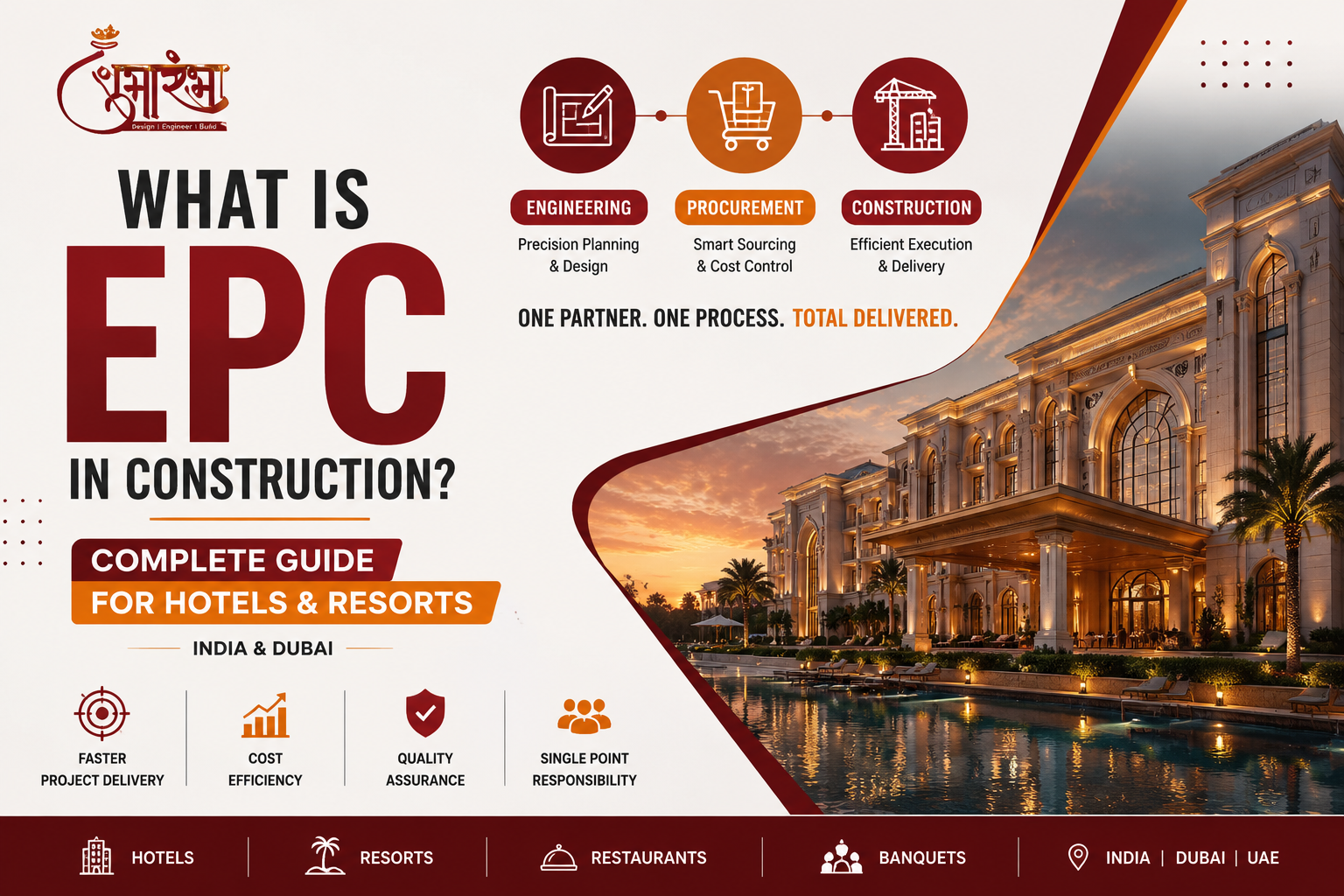
What is EPC in Construction?
EPC stands for Engineering, Procurement, and Construction—a comprehensive project delivery model in which a single contractor is responsible for the design, material procurement, and complete execution of a project.
In the hospitality sector, EPC plays a crucial role in delivering complex developments such as luxury hotels, resorts, banquet halls, and restaurants with precision, efficiency, and cost control.
Unlike traditional construction methods that involve multiple contractors, the EPC model offers a single point of accountability, ensuring streamlined coordination and consistent quality across all stages of development.
Core Components of EPC
Engineering (Design and Planning)
The engineering phase establishes the foundation of the project. It includes:
- Architectural design and concept development
- Structural engineering
- Mechanical, Electrical, and Plumbing (MEP) planning
- Space planning aligned with guest experience and operational efficiency
This phase ensures that the project is not only visually compelling but also structurally sound and operationally efficient.
Procurement (Materials and Systems)
Procurement involves the sourcing and management of all materials, equipment, and systems required for the project. Key elements include:
- Vendor selection and coordination
- Procurement of construction materials and finishes
- Acquisition of specialized systems such as HVAC, kitchen equipment, and lighting
- Cost optimization through strategic sourcing
This stage ensures the use of high-quality materials while maintaining strict control over project budgets.
Construction (Execution and Delivery)
The construction phase focuses on the physical execution of the project. It includes:
- Civil and structural construction
- Interior fit-outs and finishing
- Facade development, including GRC, glazing, and cladding
- Final installation and commissioning
The outcome is a fully developed hospitality property ready for operational deployment.
Advantages of EPC in Hospitality Projects
Hospitality developments require a high level of coordination across design, engineering, and operational planning. The EPC model addresses these complexities through:
Single-Point Responsibility
A unified team manages all aspects of the project, eliminating coordination gaps.
Accelerated Timelines
Parallel execution of design and construction phases reduces overall project duration.
Cost Efficiency
Integrated procurement and planning help maintain budget discipline.
Quality Assurance
Centralized control ensures consistency in materials, workmanship, and finishing standards.
Operational Readiness
Projects are designed with real-world hospitality operations in mind, ensuring seamless functionality from day one.
EPC vs Traditional Construction
AspectEPC ModelTraditional ModelProject ResponsibilitySingle contractorMultiple vendorsTimelineOptimized and fasterOften extendedCost ControlStructured and predictableVariableCoordinationIntegratedFragmentedRisk ExposureReducedHigher
For hospitality developments, where timelines and quality directly impact revenue, EPC offers a more reliable and efficient approach.
Applications of EPC in Hospitality
The EPC model is widely adopted across various hospitality segments, including:
- Luxury hotel development
- Resort construction
- Banquet hall and wedding venue projects
- Restaurant design and build
- Mixed-use hospitality developments
These projects demand precision, design integration, and operational foresight—making EPC the preferred delivery model.
EPC Construction in India and Dubai
Both India and Dubai are experiencing significant growth in hospitality infrastructure.
India
The expansion of tourism, destination weddings, and premium hospitality has increased demand for integrated construction solutions.
Dubai
As a global hub for luxury hospitality, Dubai requires high-performance construction models that meet international standards within tight timelines.
EPC ensures that projects in both regions are delivered with efficiency, compliance, and world-class quality.
Integration of EPC with Turnkey Delivery
EPC is often integrated with turnkey project delivery, where the contractor provides a fully completed and operational facility.
This includes:
- Fully finished interiors
- Installed systems and equipment
- Testing and commissioning
- Ready-to-use hospitality spaces
This approach allows developers to receive a complete asset without managing multiple stakeholders.
EPC Execution Approach
A structured EPC approach typically follows these stages:
- Project feasibility and site analysis
- Concept design and engineering development
- Procurement planning and vendor alignment
- Construction execution and quality control
- Final commissioning and handover
Each phase is aligned to ensure timely delivery and adherence to design intent.
Delivering EPC Excellence in Hospitality
A successful EPC partner brings together expertise in architecture, engineering, procurement, and execution. The focus extends beyond construction to include long-term operational performance and guest experience.
By integrating technical precision with design excellence, EPC enables the creation of hospitality destinations that are both functionally efficient and aesthetically refined.
Frequently Asked Questions
What does EPC mean in construction?
EPC stands for Engineering, Procurement, and Construction, a model where a single contractor manages the entire project lifecycle.
Is EPC suitable for hospitality projects?
Yes. EPC is highly suitable due to its ability to manage complex requirements efficiently.
What is the difference between EPC and turnkey projects?
EPC focuses on execution, while turnkey includes complete delivery ready for operation. Both are often combined.
Why is EPC preferred in hotel construction?
It ensures faster timelines, better cost control, and integrated project management.
Conclusion
EPC construction represents a modern and efficient approach to delivering hospitality projects. By integrating design, procurement, and execution under a single framework, it ensures speed, quality, and operational readiness.
For hotel and resort developments in India and Dubai, EPC is not only a practical solution but a strategic advantage in achieving long-term success.